
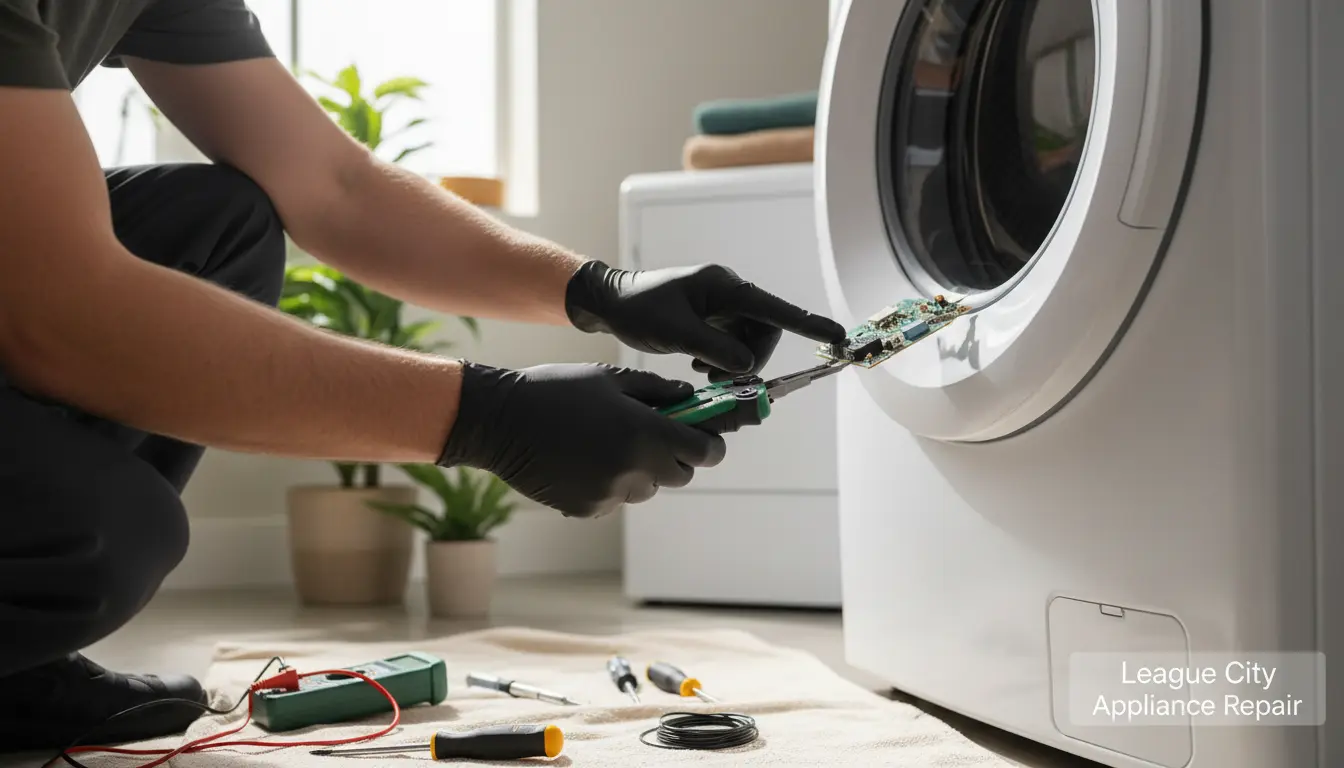
Imagine this: It’s a busy weekday morning in League City, and you’re rushing to get the family’s laundry done before heading out. Suddenly, your washing machine starts making strange noises, leaks water all over the floor, or worse, refuses to spin at all. Panic sets in as you realize this isn’t just an inconvenience—it’s an emergency that could flood your home or leave you without clean clothes for days. If you’re dealing with a washer malfunction right now, don’t worry. As the trusted local experts at League City Appliance Repair, we’re here to guide you through the immediate steps to take. In this post, we’ll cover what to do first in an emergency washer repair situation, helping you stabilize the issue until professional help arrives. Serving League City and nearby areas like Friendswood and Dickinson, we know how vital quick action is in our humid Gulf Coast climate, where moisture can exacerbate appliance problems.
Whether it’s a sudden leak, a failure to drain, or an unresponsive control panel, knowing the right first moves can prevent further damage and save you time and money. Let’s dive into the essentials.
Understanding Common Washer Emergencies
Washers are workhorses in any household, but they can fail unexpectedly due to wear and tear, overloading, or even power surges common in our area. Before jumping into fixes, it’s crucial to identify the type of emergency you’re facing. This helps you respond appropriately without making things worse.
Signs of a Washer Emergency
Look out for these red flags that demand immediate attention:
- Water Leaks: Water pooling around the machine or inside the drum signals a burst hose, faulty seal, or cracked tub. In League City’s frequent rainy seasons, ignoring this could lead to mold growth in your laundry room.
- Strange Noises: Grinding, banging, or squealing sounds often indicate unbalanced loads, worn belts, or bearing issues. These can escalate to complete breakdowns if not addressed.
- Failure to Drain or Spin: If your washer won’t empty or agitate, it might be a clogged pump or motor problem, leaving clothes soaked and your floor at risk.
- Electrical Issues: Sparks, burning smells, or a tripped breaker point to wiring faults—never ignore these, as they pose fire hazards.
By recognizing these signs early, you can act fast. For instance, if you’re in Seabrook and notice leaks during a storm, quick isolation is key to avoiding water damage.
Immediate Safety Steps: What to Do First
When your washer throws a tantrum, safety comes first. Follow these actionable steps to protect yourself, your home, and the appliance.
1. Turn Off Power and Water
The absolute first action? Unplug the washer from the electrical outlet or flip the circuit breaker. This prevents shocks or short circuits. Next, shut off the water supply valves behind the machine—usually two knobs for hot and cold lines. In a pinch, if valves are stiff, use pliers gently, but avoid forcing them.
Why this matters: In League City’s older homes, especially near Tiki Island, outdated wiring can amplify electrical risks. Taking 30 seconds to disconnect everything buys you time and safety.
2. Assess and Contain the Damage
If water is leaking, grab towels or a shallow pan to mop up standing water. For minor leaks, place a bucket under the suspected source, like the inlet hoses. Avoid running the machine further—this could worsen cracks or floods.
Pro tip: If the leak is severe, move valuables away from the area. Our team at League City Appliance Repair has seen countless soggy laundry rooms in San Leon, and containment is always the hero move.
3. Check for Simple Fixes
Sometimes, emergencies stem from user errors. Ensure the load isn’t unbalanced—redistribute clothes if possible (with power off). Inspect the door seal for debris or the lint filter for clogs. These quick checks resolve up to 20% of issues without tools.
If it’s a power issue, verify your home’s breaker isn’t tripped by other appliances. But remember, if you’re uncomfortable tinkering, stop here—DIY gone wrong can void warranties.
Troubleshooting Tips Before Calling Pros
Once safety is secured, try these practical diagnostics. These steps are designed for non-experts and can pinpoint the problem without risking further harm.
Inspect Hoses and Connections
Examine the fill and drain hoses for kinks, cracks, or loose fittings. Tighten connections by hand, but don’t overtighten. A common culprit in our area’s hard water is mineral buildup—run a vinegar cycle periodically for prevention, tying into our routine maintenance services.
Test the Drain System
If draining is the issue, check the drain hose for blockages. Straighten it if looped too tightly, and ensure it’s not inserted too far into the standpipe (max 4-6 inches). For front-loaders, clean the pump filter at the bottom front panel—it’s often a simple twist-out access.
Local insight: League City’s coastal humidity promotes lint and debris buildup, so regular checks are essential. If this doesn’t help, it might be time for professional freezer repair if your washer shares space with other appliances.
Evaluate the Control Panel and Lid Switch
For top-loaders, the lid switch might be faulty—test by pressing it firmly. On modern machines, error codes flash on the panel; note them down (e.g., ‘E01’ for water issues). Google the code for your model, but avoid resetting repeatedly, as it can mask deeper problems.
If your washer is older, consider if it’s worth repairing versus appliance installation of a new, energy-efficient model suited to Texas utilities.
When to Call in the Experts
Not all emergencies are DIY-friendly. If basic steps fail, or if you smell burning or see sparks, call professionals immediately. Delaying can lead to costly water damage or appliance replacement.
At League City Appliance Repair, we specialize in swift stove repair and washer fixes, arriving equipped for any scenario. Our technicians serve League City and surrounding spots like Friendswood with same-day service. Reach us at (877) 461-4762 for emergency response—we diagnose accurately to avoid unnecessary parts swaps.
For commercial setups, check our commercial appliance repair options if your business laundry is affected.
FAQ: Common Questions About Emergency Washer Repair
1. How long can I wait before calling for washer repair?
If it’s leaking or not draining, don’t wait—address it within hours to prevent flooding. For noises or minor issues, up to a day is okay, but schedule soon to avoid breakdowns.
2. Can I use my washer while troubleshooting?
No! Always unplug and shut off water first. Running it in distress can cause irreversible damage or safety hazards.
3. What’s the average cost of emergency washer repair in League City?
Costs range from $100-$300 depending on the issue, plus parts. We offer transparent pricing—no surprises. Call (877) 461-4762 for a free estimate.
4. How can I prevent future washer emergencies?
Follow load guidelines, clean monthly, and schedule annual tune-ups. Our routine maintenance service keeps things running smoothly in humid climates like ours.
5. Do you offer emergency services after hours?
Yes! League City Appliance Repair provides 24/7 support for true emergencies, ensuring minimal disruption to your day.
Conclusion: Act Fast and Restore Peace
Dealing with an emergency washer repair doesn’t have to overwhelm you. By prioritizing safety, containing damage, and knowing when to seek help, you can navigate the crisis effectively. In League City, where family life moves fast, a reliable washer is non-negotiable—and we’re here to make it happen.
Don’t let a broken washer derail your routine. Contact League City Appliance Repair today at (877) 461-4762 for expert, local service. Whether it’s a quick fix or full overhaul, our team is ready to get you back on track. Schedule now and experience hassle-free appliance care!